
Do aftermarket parts void your Tesla warranty in Canada?
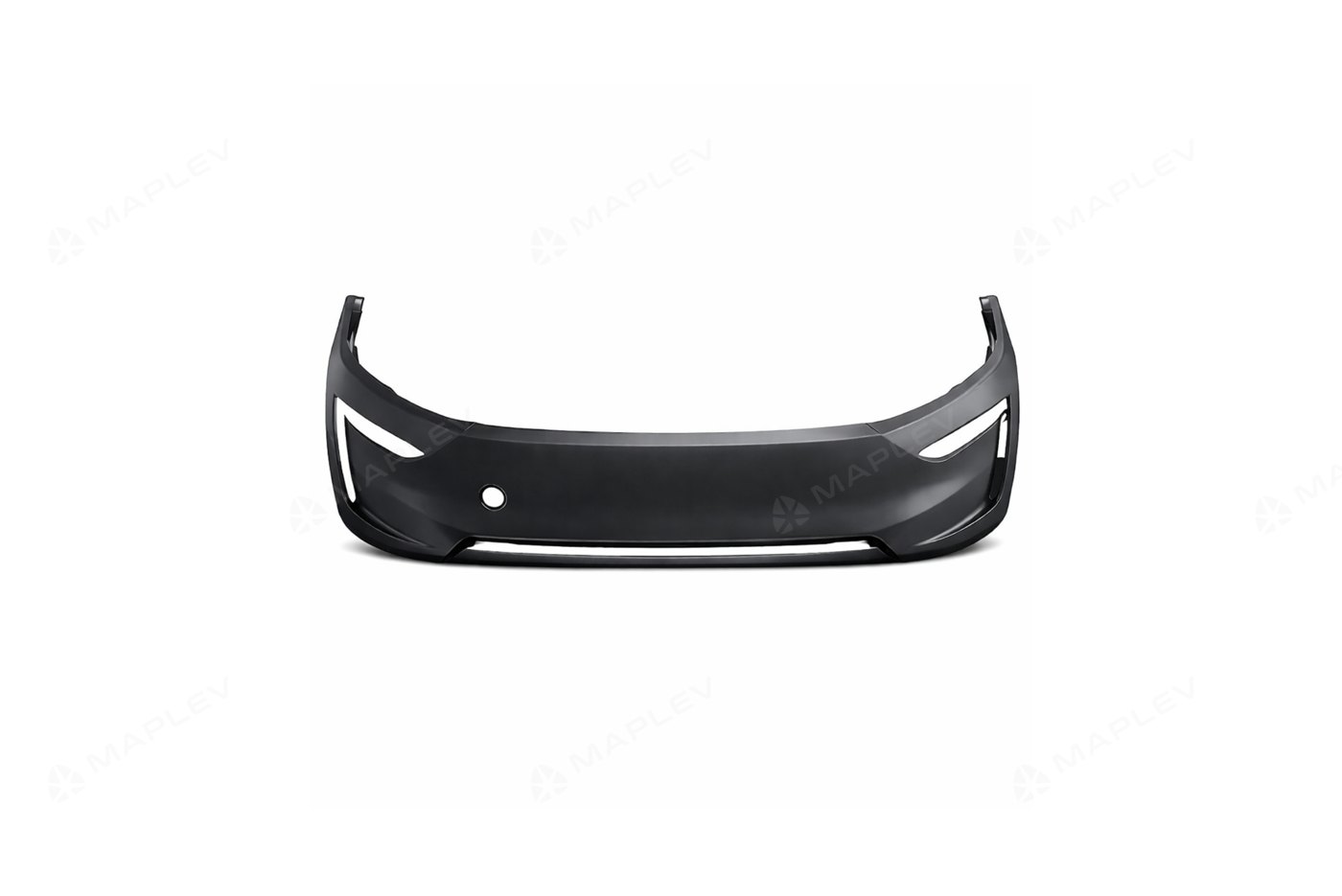
Short answer: no. Using a quality aftermarket collision part does not automatically void your Tesla's factory warranty. In the United States, the Magnuson-Moss Warranty Act forbids blanket voiding and puts the burden on the manufacturer to show that the specific part caused the specific failure. Canada's Competition Act establishes no equivalent rule requiring a manufacturer to prove that an aftermarket part caused a particular failure before denying coverage. What protects a Canadian owner is narrower but real: Tesla's own warranty text states that using parts not supplied by Tesla leaves the New Vehicle Limited Warranty in effect — while excluding the non-Tesla part itself, its installation, and issues arising from it — and provincial consumer-protection law may add further protections that vary by province.
There's an extra reason this rarely bites on body work: a collision part is fitted after an accident, as an insurance repair. Replacing a cracked bumper cover or a bent fender does not by itself touch your battery, drive unit, or the rest of the powertrain warranty.
The short version, by law
United States — the Magnuson-Moss Warranty Act (in force since 1975) makes it illegal for a manufacturer to void your warranty simply because you used an aftermarket or recycled part. To deny a claim, the burden is on the manufacturer to prove that the specific aftermarket part caused the failure it is refusing to cover.
Canada — neither the Competition Act nor the Competition Bureau's warranty guidance creates a federal rule requiring an automaker to prove that an aftermarket part caused a particular failure before denying warranty coverage. A warranty condition requiring OEM parts or a designated service provider may fall within the Act's definition of tied selling (s.77), but tied selling is a reviewable practice heard by the Competition Tribunal, not a criminal or automatic offence: the Tribunal must find the practice is by a major supplier or widespread, has an exclusionary effect, and that competition is or is likely to be lessened substantially. The Bureau's published warranty guidance rests on s.74.01(1)(c), which addresses warranty representations made to the public that are materially misleading or have no reasonable prospect of being carried out. (One nearby provision is often misread: s.74.01(1)(b) does place “the proof” on the party making the representation — but only for performance, efficacy or length-of-life claims that must be backed by adequate and proper testing, not for whether a part caused a failure.) In practice, Canadian protection rests on the warranty's own terms and provincial consumer law. Tesla's warranty text is two-sided: it states that using parts not supplied by Tesla leaves the New Vehicle Limited Warranty in effect, and it excludes the non-Tesla part itself, its installation, and issues arising from it — which by its own wording is narrower than cancelling your coverage.
What Tesla's warranty actually says
Tesla's wording is strict: the New Vehicle Limited Warranty does not cover non-Tesla parts or accessories, their installation, or damage arising from their installation or use; the aftermarket part itself is not warrantied by Tesla (that is the part supplier's responsibility), and Tesla officially recommends only genuine Tesla parts.
But 'not covered if it causes damage' is not the same as 'your whole warranty is gone.' Tesla's exclusion, by its own wording, reaches the damage a non-Tesla part causes — it does not cancel unrelated coverage simply because an aftermarket part is on the car.
Why collision parts are a special case
Collision repairs sit largely outside the warranty conversation. Accident and collision damage is excluded from Tesla's warranty (the battery-fire coverage in the Battery and Drive Unit warranty is the narrow exception) — that is what insurance is for — so fitting an aftermarket bumper, fender, or lamp after a crash does not by itself 'use up' or void the battery and drivetrain coverage owners actually care about.
The one area to treat with genuine care is anything tied to electronics and driver-assist systems — cameras, radar and ultrasonic sensors, and the brackets that position them. A poorly-made part there could plausibly be linked to a calibration or electronics fault, which is exactly the kind of specific causation an automaker could point to. For plain body panels and bumper covers, that risk is minimal.
Aftermarket parts also keep your car repairable
There is a bigger reason the choice matters. As repair costs climb, more vehicles are written off as a 'total loss' — and a total loss is usually worse for the owner than a repair. A 2026 study by the Automotive Body Parts Association found that quality aftermarket parts, by lowering the cost of a repair, can keep a borderline estimate under the total-loss threshold and keep the car on the road.
The cost gap is real. That study cites average common collision-part prices of roughly US$554 for OEM versus about US$307 for the aftermarket equivalent in 2024 — close to half the price. In a small qualitative interview study of about 30 U.S. owners, it also reported that more than 75% said they would have considered quality aftermarket parts had they simply been offered them during the estimate — a directional signal, not a population statistic.
Frequently asked
Will an aftermarket bumper void my Tesla warranty?
No. A bumper is a collision (body) part fitted after an accident, and accident damage is excluded from the warranty anyway, so it does not by itself affect your battery or drivetrain warranty. Tesla's warranty excludes the non-Tesla part, its installation and issues arising from it — specific exclusions, not a cancellation of your other coverage.
Can Tesla legally refuse warranty service because I used a non-Tesla part?
Not as a blanket cancellation. Tesla's warranty excludes damage caused by non-Tesla parts. In the U.S., Magnuson-Moss puts the burden on the manufacturer to show the specific part caused the specific failure; Canada's Competition Act sets no equivalent rule, but the exclusion by its own terms reaches the non-Tesla part, its installation and issues arising from it — and Tesla's warranty text states the warranty otherwise remains in effect. Unrelated coverage stays in force.
Are there parts where I should be more careful?
Yes — parts tied to driver-assist and electronics: cameras, radar, ultrasonic sensors, and their mounting brackets. If one of those causes a calibration or electronics fault, that is the kind of causation a manufacturer could point to. Plain body panels and bumper covers carry very little of that risk.
Is this legal advice?
No — this is general information. Warranty terms vary and every claim is judged on its own facts, so check your vehicle's warranty booklet or ask a professional about your specific situation.
Sources
- Auto Care Association — Magnuson-Moss Warranty Act
- Auto Care Association — Magnuson-Moss & aftermarket auto parts facts
- Tesla — New Vehicle Limited Warranty, North America (PDF; 'parts not supplied by Tesla' and exclusions)
- Competition Act, s. 74.01 — misrepresentations to the public (warranty representations: s. 74.01(1)(c))
- Competition Act, s. 77 — exclusive dealing, tied selling and market restriction (Part VIII, reviewable by the Competition Tribunal)
- Competition Bureau — Warranties and guarantees (deceptive marketing practices)
- T Sportline — Will installing aftermarket parts void my Tesla warranty?
- Automotive Body Parts Association — TOTALED: The Real Costs of Vehicle Loss (2026)