
OEM vs aftermarket Tesla collision parts: cost, fit, and warranty
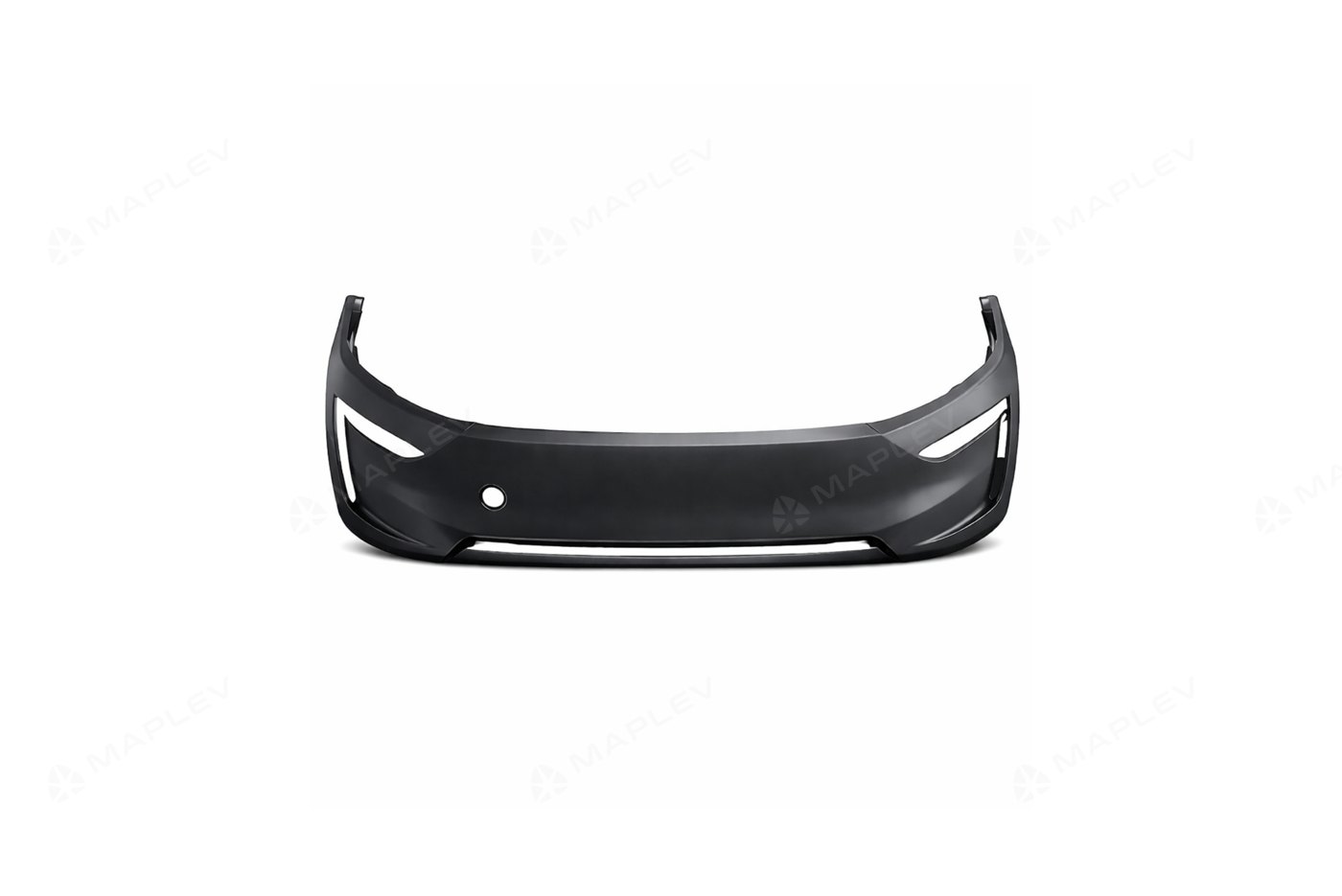
Short answer: for Tesla Model 3 and Model Y collision work, a quality aftermarket body panel fits the same points as the OEM part and costs roughly half as much, without affecting your factory warranty. OEM makes the most sense on parts tied to cameras, radar and other driver-assist hardware; for plain bumper covers, fenders and lamps the aftermarket part is usually the better-value choice.
The gap is not small. A 2026 study by the Automotive Body Parts Association put 2024 average common collision-part prices at roughly US$554 for OEM versus about US$307 for the aftermarket equivalent — close to half. On a repair that sits near the total-loss threshold, that difference can be what keeps the car repairable instead of written off.
Cost: where the money actually goes
On most Tesla collision estimates the parts are the smaller half of the bill; labour rate and paint blending move it far more. But parts are the line you have the most control over — swapping a few OEM panels for quality aftermarket equivalents at about half the price can meaningfully lower the total without touching labour hours.
That is also why aftermarket parts matter beyond the invoice: by lowering repair cost, they keep borderline estimates under the total-loss threshold. In a small qualitative interview study of about 30 U.S. owners, the same report noted that more than 75% said they would have considered quality aftermarket parts had they simply been offered them during the estimate.
Fit: what 'direct-fit' means and doesn't
Quality aftermarket collision panels are made to the same mounting points and seams as the OEM part, so a bumper cover, fender, hood or lamp bolts up in the same place. What you should still confirm is the exact variant: Model 3 front bumpers differ by park-assist sensor holes, tail lamps differ by 3-pin vs 4-pin connector, and trim levels like Highland Performance can use a different base part number entirely.
This is where cross-referencing to the Tesla OE number matters — matching the estimate's OE number to the aftermarket part removes the interchange guesswork. Our free OE lookup tool and cross-reference table exist for exactly that.
Warranty: the part that worries owners most
Fitting an aftermarket collision part does not automatically void a Tesla's factory warranty. In the U.S., the Magnuson-Moss Warranty Act puts the burden on the manufacturer to show the specific part caused the specific failure. Canada's Competition Act sets no equivalent rule — but Tesla's warranty text says it remains in effect when non-Tesla parts are used, while excluding the part itself, its installation and issues arising from it. And a collision part fitted after an accident doesn't by itself touch the battery or drivetrain warranty owners actually care about.
The area to treat with genuine care is anything that mounts or aligns driver-assist hardware — cameras, radar, ultrasonic sensors and their brackets. There, a poorly-made part could plausibly be linked to a calibration fault, which is the kind of specific causation a manufacturer could point to. For plain body panels and bumper covers, that risk is minimal. Our fuller warranty guide covers the law in detail.
So which should you choose?
Aftermarket is usually the better value for bumper covers, fenders, hoods, lamps, brackets and underbody shields — the parts that make up most collision work — as long as they're quality parts cross-referenced to the correct Tesla OE number. Lean OEM for sensor-adjacent and structural parts where hardware generation or calibration is in play, or when the vehicle is under a specific manufacturer program that requires it.
None of this is legal advice — warranty terms vary and every claim is judged on its facts. When in doubt on a specific part, send us the OE number and we'll confirm fitment and options.
Frequently asked
Are aftermarket Tesla parts cheaper than OEM?
Generally yes. A 2026 Automotive Body Parts Association study put 2024 average common collision-part prices at about US$307 aftermarket versus US$554 OEM — roughly half. Parts are usually the smaller half of a collision bill, but they're the line you control most.
Do aftermarket collision parts fit a Tesla properly?
Quality aftermarket panels are built to the same mounting points as OEM and bolt up in the same place. Confirm the exact variant — park-assist sensor holes on Model 3 bumpers, 3-pin vs 4-pin tail lamps, and trim-level-specific parts — by cross-referencing the Tesla OE number.
Will an aftermarket part void my Tesla warranty?
No, not automatically. In the U.S., Magnuson-Moss puts the burden on the manufacturer to show a specific part caused a specific failure. Canada's Competition Act sets no equivalent rule, but Tesla's warranty text keeps the warranty in effect when non-Tesla parts are used, excluding the part itself, its installation and issues arising from it — not unrelated coverage. A collision part fitted after an accident doesn't by itself affect the battery or drivetrain warranty.
When is OEM the better choice?
For parts tied to driver-assist hardware — cameras, radar, ultrasonic sensors and their brackets — and structural parts where hardware generation or calibration matters, or when a specific manufacturer program requires OEM. For plain body panels and bumper covers, quality aftermarket is usually the better value.